In the 1980s, flexographic printing technology developed rapidly. The performance of flexographic printing machines, the processing precision of the ink roller and the resolution of the plate are improved obviously. The quality of the flexographic printing machine has reached or close to the level of offset printing or gravure. Therefore, flexographic printing is widely used in packaging and printing especially in paper container printing, besides being popularized and used in newspapers and printing book. Now, in industrial developed countries, flexographic printing has taken a leading position in packaging and printing.
China's flexographic printing technology was first popularized in paper container printing. In recent years, in addition to importing nearly 200 flexo printing production lines from abroad, many china printing machine manufacturers have developed the production line of domestic flexo printing, which has been put into use. With continuous technological advancement and cost advantages, the high-speed flexible printing machines made in China are rapidly gaining market share both domestically and internationally. It is certain that flexographic printing will achieve even greater and further development in China's packaging and printing industry.
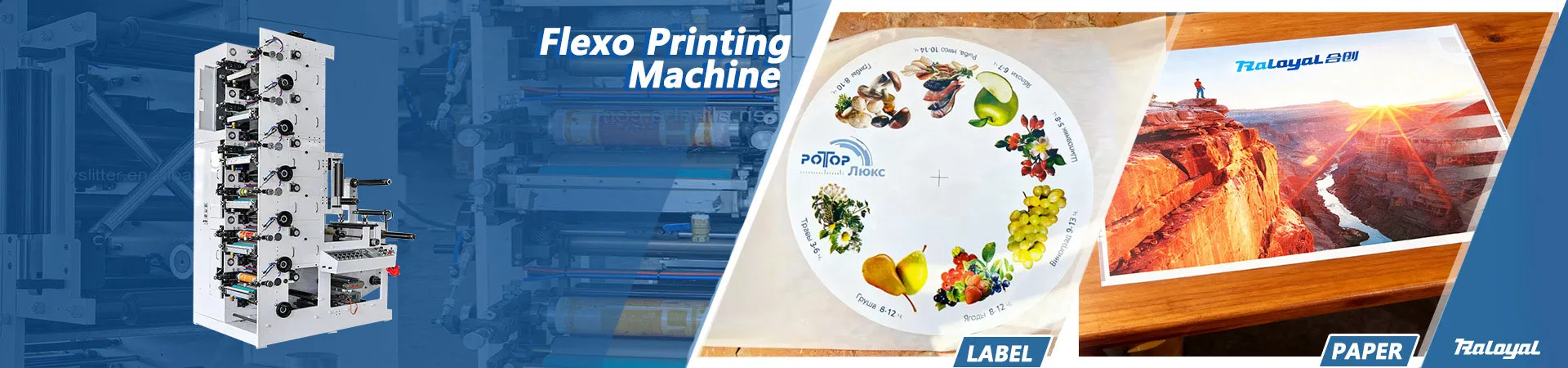
As one of the professional flexo printing machine suppliers in China, Raloyal provides complete flexographic printing machine solutions in China, covering narrow-web label flexo presses, wide-web corrugated carton flexo printing machines, and high-speed central impression (CI) flexo printing machines for flexible packaging.
(1) Flexographic printing. A printing process that uses a flexible printing plate and transfers ink via an anilox roller. This method is widely employed in modern Chinese printing machine manufacturing for its efficiency and adaptability.
(2) Flexible version. A convex plate made of elastic solid materials such as rubber and photosensitive resin.
(3) Rubber relief. A synthetic rubber relief plate made of a template pressing or engraving.
(4) Photosensitive resin relief. Photopolymerized convex plate made of photosensitive resin by exposure and washing. There are two types of solid and liquid solidification.
(5) Rollerhead roller. The transfer roller of flexographic printing, the surface system has a concave hole or mesh groove line, for printing control of ink transfer.
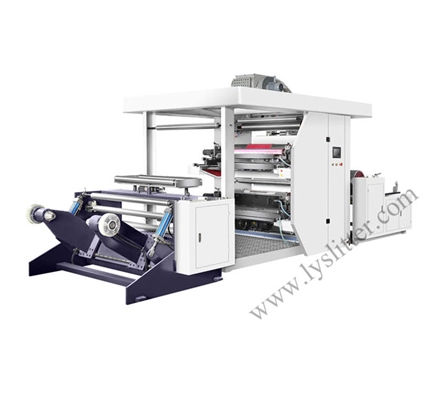
(6)Flexographic printing press. A machine that completes the printing process using a flexible plate and anilox roller for ink transfer. As a core category of industrial Chinese printing machine products, it supports diverse packaging and label printing needs.

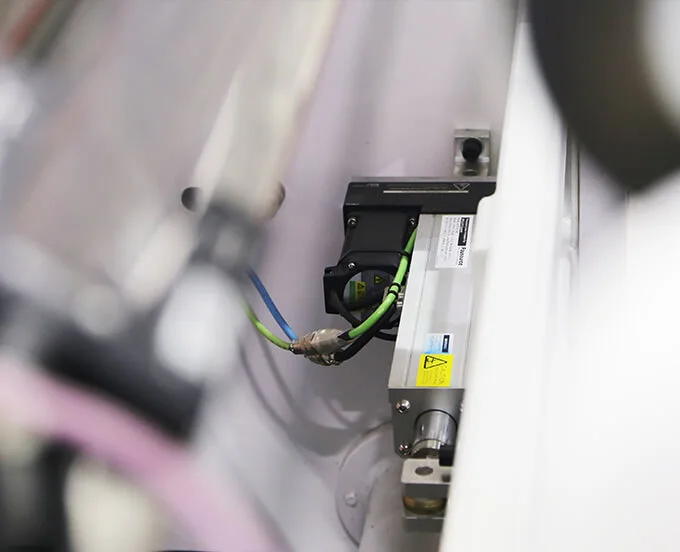
Modern flexographic presses from a professional flexo label printing machine factory are characterized by advanced design principles, including the standardization of parts, wide applicability of components, and a high degree of product serialization. This ensures consistency, reliability, and easier maintenance across production lines.
Key operational advantages include the ability to achieve double-sided printing by adjusting the substrate's transmission path, along with user-friendly operation and robust performance for daily use. Equipped with automated control systems for tension, edge positioning, and registration, these machines enable high-speed, multicolor printing with precision and repeatability.
Currently, the flexographic printing process represents the mainstream in flexible packaging and label production.
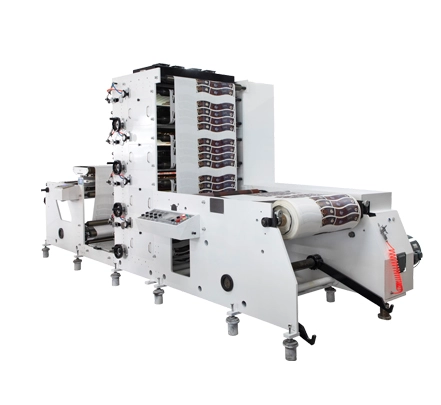
To meet demand for smaller specifications, multiple print jobs, and integrated post-printing processes, narrow-web flexographic machines—typically with a substrate width around 600 mm—are often utilized. This type of press is especially common in flexo label printing machine factory offerings, where it is used primarily for printing pressure-sensitive materials, paperboard, tickets, and labels. These substrates often undergo further finishing operations such as varnishing, punching, embossing, and die-cutting.
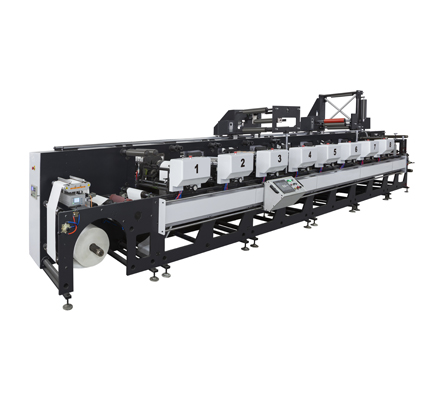
To streamline production, various functional modules can be combined into an automated flexographic printing line. This integration enhances functionality, boosts productivity, and lowers overall printing costs. Printing units may be configured in satellite, stacked, or unit-type designs, with operational speeds typically reaching up to 150 meters per minute.
Regardless of the configuration, every flexo press consists of essential sections: unwinding, printing, drying/cooling, and rewinding. Additionally, advanced automatic regulation and control systems can be incorporated based on user requirements, further elevating efficiency and print quality—a hallmark of equipment from a dedicated flexo label printing machine factory.

 English
  中文
中文  français
  Deutsch
  Español
  português
  العربية
  Ελλάδα
  Polska
  беларускі
  български
  Türkçe